
INDEX
- Introduction
- Requirements
- What we are building
- Level 1: rules and scripts
- Level 2: local AI
- Level 3: external GPU with Runpod
- Level 4: paid model
- Automating model switching
- Simple router example
- Extras
- Full workflow
1. Introduction
The mistake is not using paid models. The mistake is sending every small task to the most expensive model by default.
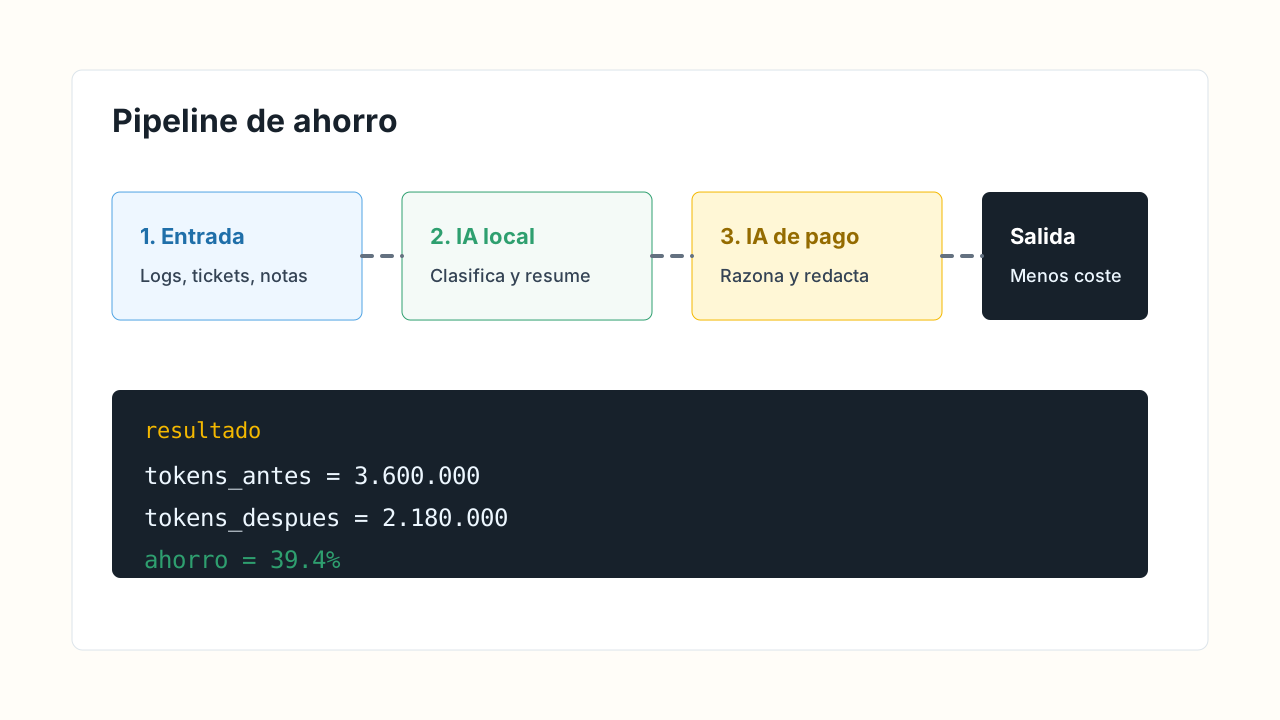
This lab builds a routing strategy: rules first, local AI second, external GPU when useful, paid AI for quality and reasoning.
2. Requirements
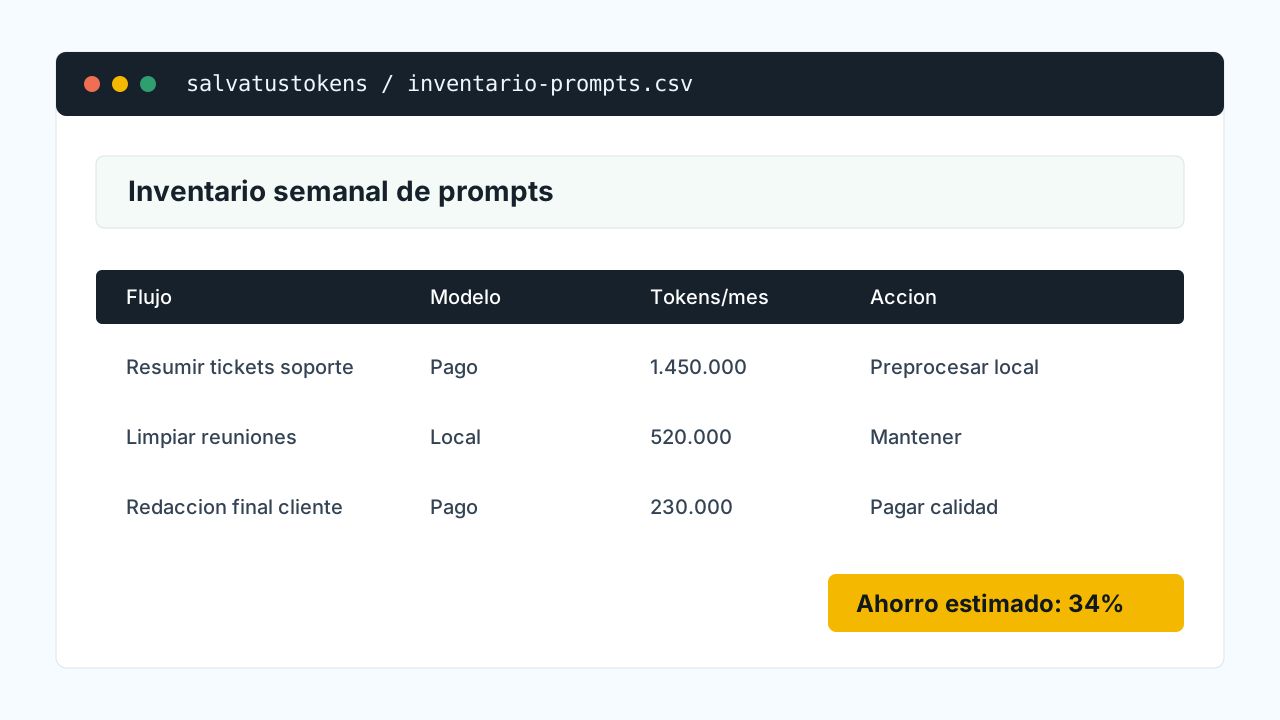
We need a prompt inventory, approximate monthly volume, paid model pricing, a local AI option and a clear idea of which tasks are critical.
3. What we are building
We classify tasks by risk and repetition, use rules when possible, move mechanical work local, use external GPU when local is not enough and automate model choice.
4. Level 1: rules and scripts
Many tasks do not need AI: deduplication, JSON validation, keyword routing, regex extraction and log slicing.
def detect_ticket_type(text):
    text = text.lower()
    if "vpn" in text:
        return "vpn"
    if "outlook" in text or "email" in text:
        return "email"
    return "review"
5. Level 2: local AI
Local AI fits classification, summarization, JSON extraction, context preparation and escalation detection.
6. Level 3: external GPU with Runpod
Runpod offers on-demand GPUs. Its docs separate Pods, where you control a GPU environment, from Serverless, where endpoints run workloads without managing servers and avoid idle compute costs.
Use it when local hardware is not enough or when you need temporary GPU power.
7. Level 4: paid model
Use paid models for complex reasoning, ambiguous decisions, final writing, architecture and critical review.
8. Automating model switching
Options:
- LiteLLM for a gateway, spend tracking and retry/fallback logic.
- OpenRouter for model routing,
openrouter/autoand fallback arrays. - LangChain middleware if you are already building agents.
- Your own simple router.
9. Simple router example
def choose_model(task):
    if task["risk"] == "high":
        return "paid"
    if task["type"] in {"classification", "extraction", "summary"}:
        return "local"
    if task["tokens"] > 50000 and task["privacy"] == "low":
        return "runpod"
    return "paid"
10. Extras
Cache repeated answers, tag sensitivity and measure cost by workflow instead of by isolated prompt.
11. Full workflow
Inventory prompts, classify risk, use rules, route mechanical work local, use external GPU when needed, pay for quality, automate routing and measure monthly.